Petrovaradin Fortress: how to spend a few hours on the Gibraltar of the Danube
The backwards clock, kilometres of tunnels and the best sunset spot in the city – everything you need before you climb up to Novi Sad’s most famous landmark.
· 6 min read
Why the fortress matters
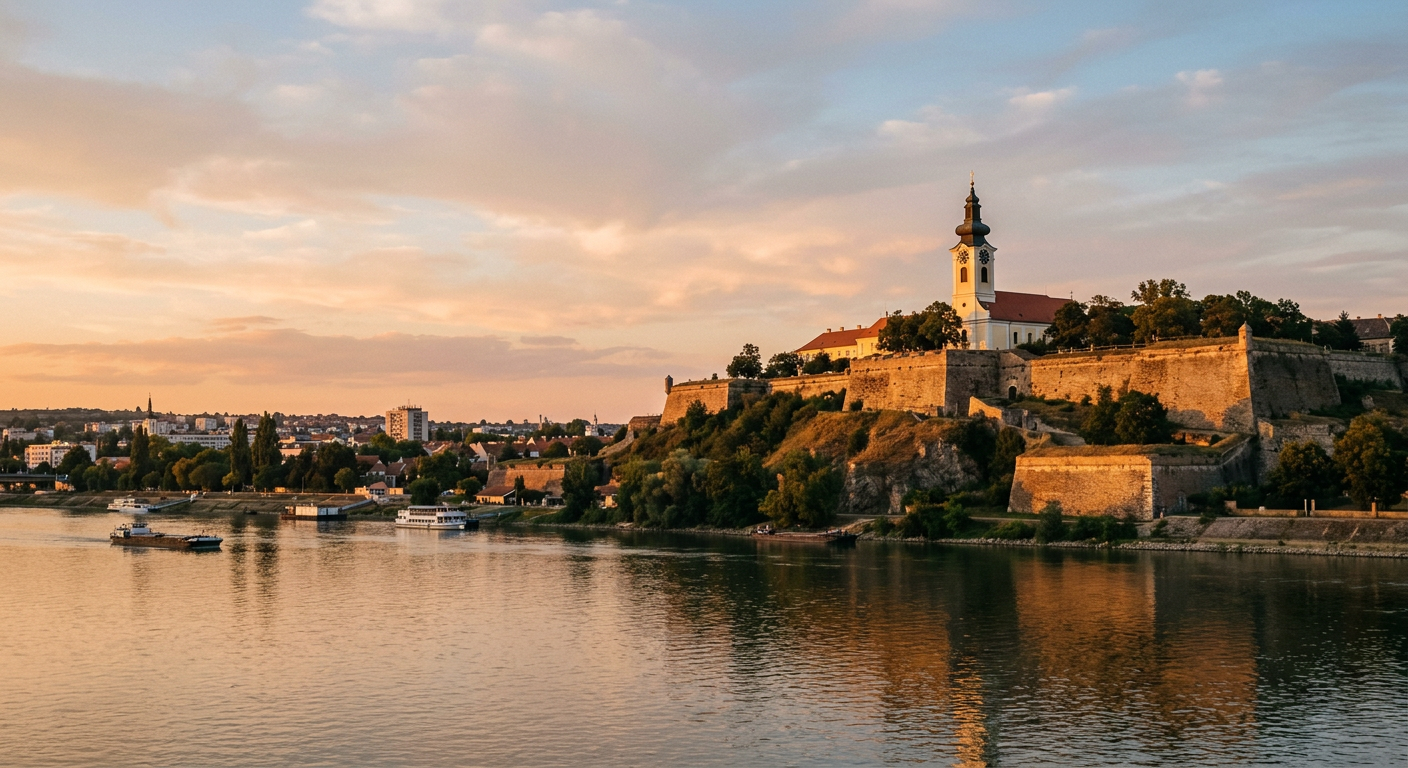
Ask anyone in Novi Sad where to start and they will point across the river. Petrovaradin Fortress sits on a rocky outcrop on the right bank of the Danube, looking straight back at the old town. The Habsburgs built it between 1692 and 1780 to hold the frontier against the Ottoman Empire, and its size and strength earned it the nickname “the Gibraltar of the Danube”.
It was never just a pile of walls. In 1716 Prince Eugene of Savoy defeated a much larger Ottoman army in the Battle of Petrovaradin, fought just below the fortress, and that victory helped push the frontier south for good. Once the military threat faded, the fortress slowly turned into what it is today: a quiet, slightly overgrown hilltop where locals come to walk, sit on the walls and watch the city.
The clock that tells time backwards
The symbol of the fortress is its clock tower, and it has a small trick. The hands are swapped – the long hand shows the hours and the short one shows the minutes. The usual explanation is that boatmen on the Danube needed to read the hour from far away, so the hour hand was made the bigger one.
Because it looks “wrong” to anyone used to a normal clock, locals call it the drunken clock (pijani sat). Stand beneath it for a photo, then walk to the railing next to it – this is the classic view over the river, the bridges and the domes and spires of Novi Sad.
Underground galleries
What you see above ground is only half of the fortress. Beneath it runs a network of military galleries on several levels, often quoted at around 16 kilometres in total. They were dug so soldiers could move, store supplies and defend the walls without being seen.
Only a small section is open to visitors, and only with a guide, usually booked through the City Museum of Novi Sad, which has its exhibitions inside the fortress. The tunnels are cool even in midsummer, so a light layer is a good idea.
Artists, cafés and the upper plateau
Many of the old barracks and casemates are now used as studios by painters and sculptors, which gives the upper fortress a relaxed, bohemian feel. Wander the cobbled lanes and you will find small galleries, a few cafés and terraces with wide views over the Danube.
Below the walls lies the Lower Town (Podgrađe), a compact baroque quarter with low houses and narrow streets. It is worth a slow walk on the way up or down, especially in the late afternoon when the light hits the facades.
Getting there
From the city centre it is a pleasant walk of about twenty to thirty minutes: head to the Danube, cross the Varadin Bridge and climb up through the Lower Town. There are stairs and a steeper path, so comfortable shoes help. Taxis and city buses also go to Petrovaradin if you would rather save your legs for the walls.